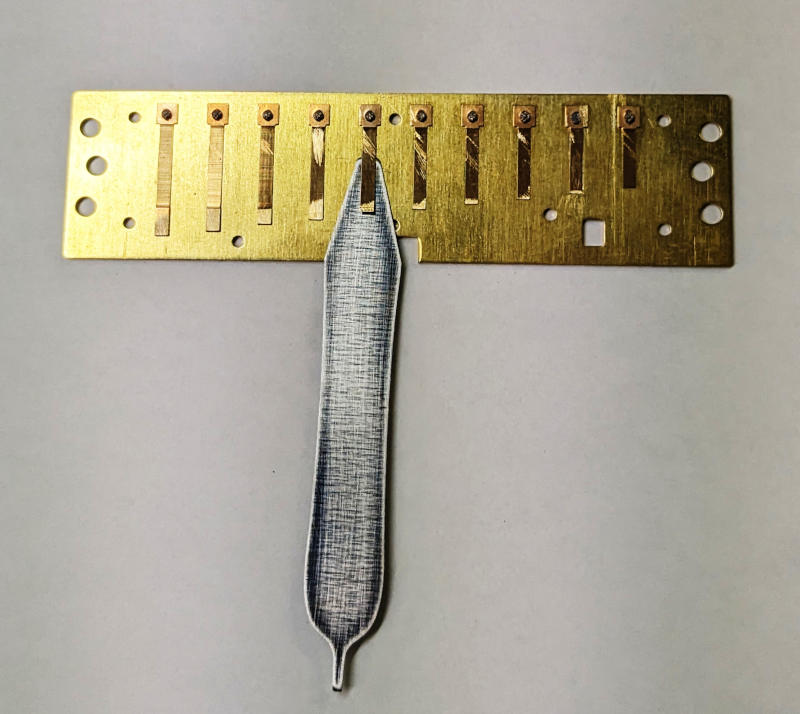
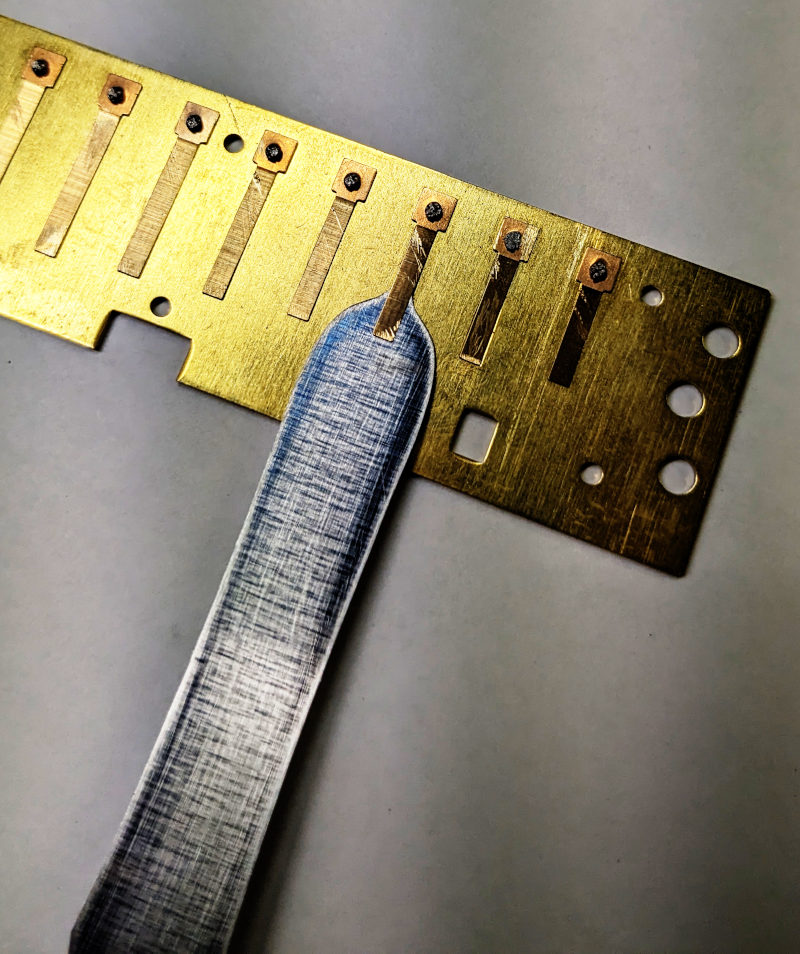
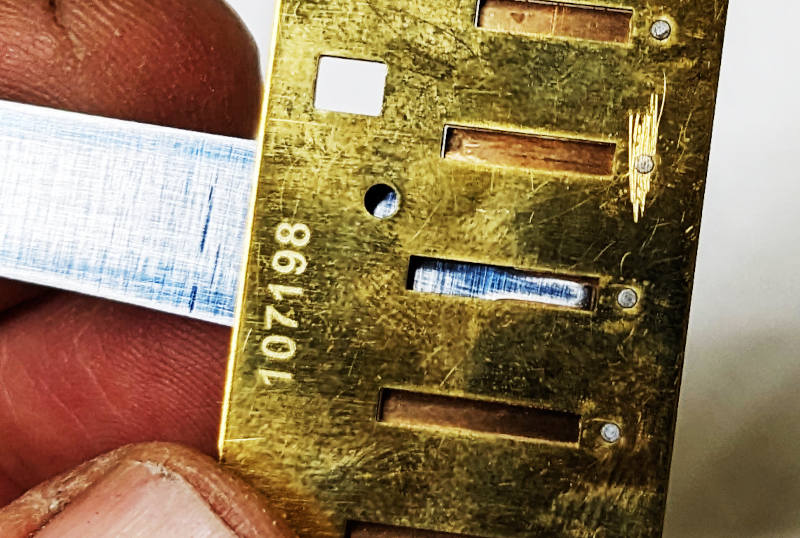
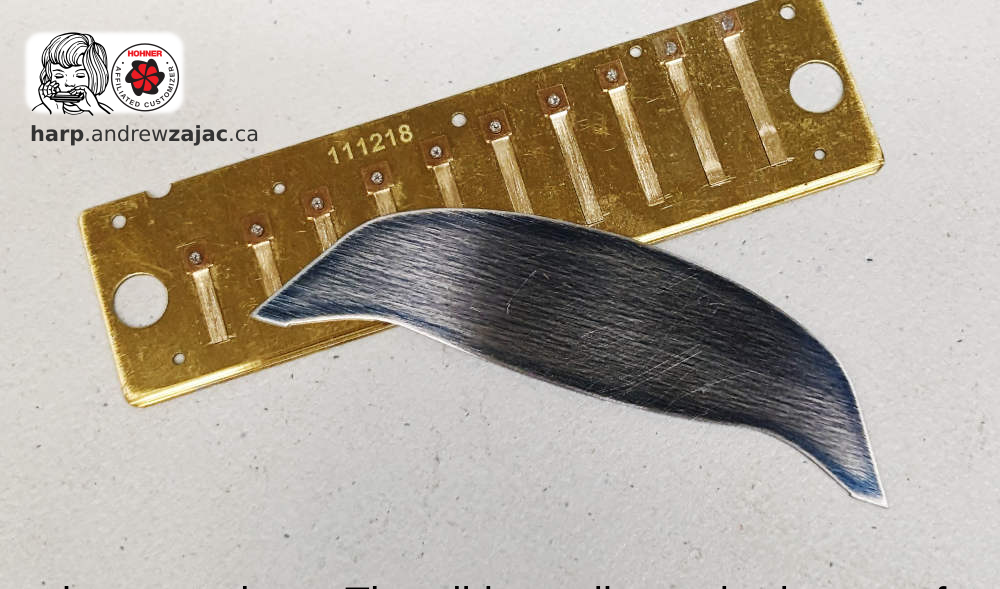
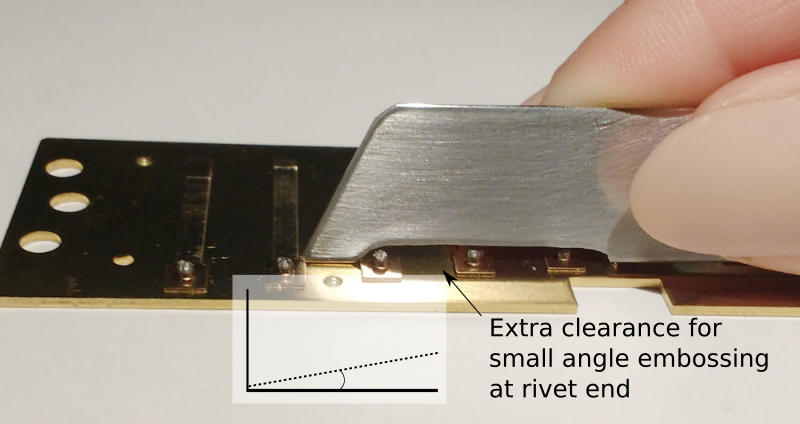
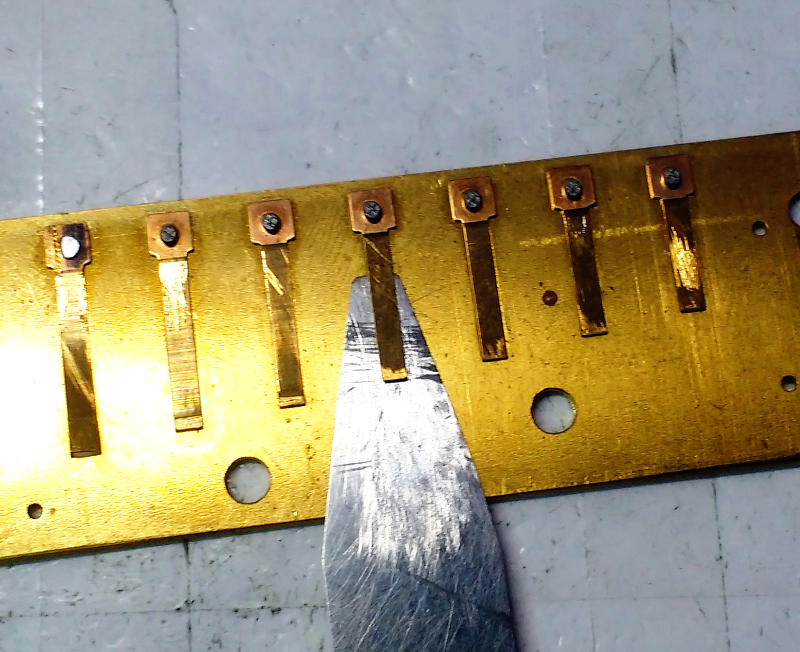
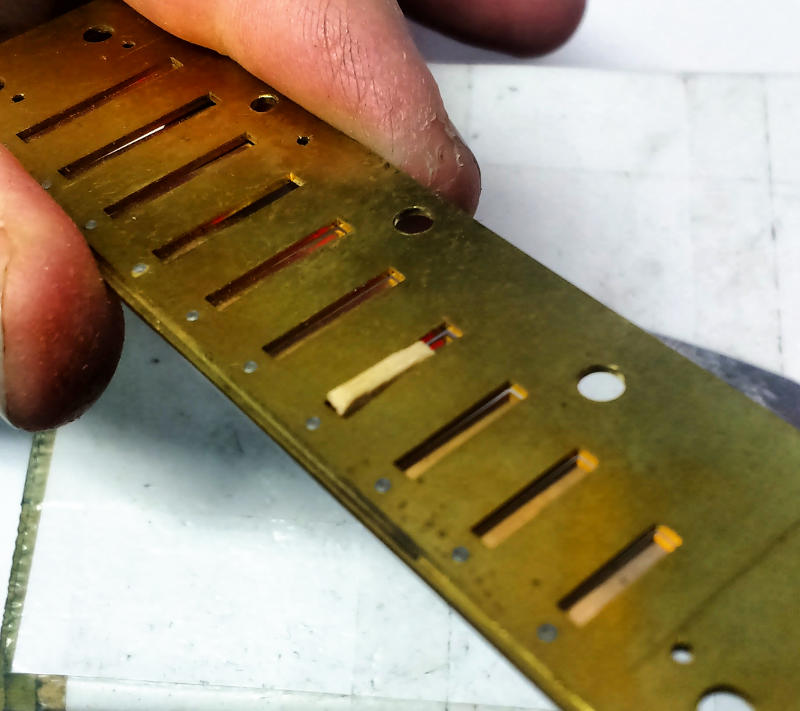
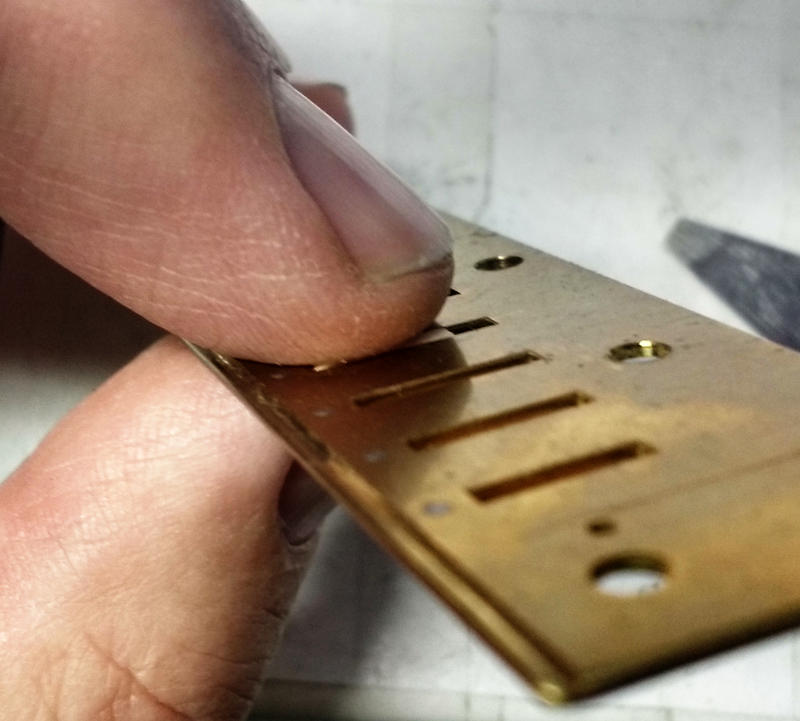
This tool has tips that have been carefully prepared using a five-step process. It will get under even the most closely gapped reeds.
Advance the tool at a sharp angle to get under the reed.
The tail supports a reed while tuning. Use the tail to support the blow reeds while they are still on the comb. Support the reed when lowering the pitch by advancing the tail to the back wall of the slot.
This will ensure you do not bend your reeds out of shape as you tune them.
Use this tool along with the brass reed tools to shape your reeds, too.
(New version 2021-06!) This tool is made from tempered high-carbon steel and both tips are finished by hand. The tips are carefully sharpened to the correct specification to allow it to emboss the slot effectively without shredding or otherwise damaging the slot. I ensure that each tip is perfect.
Embossing increases the efficiency of the reed as it goes through the slot. By using a tool to press down onto the edges of the slot, a small ridge of metal is created in the slot. This ridge decreases the space between the reed and the slot. The closer tolerance will cause the reed to make more sound and require less breath force to activate.
Full-length slot embossing can be easy! The embossing tool is effective on stainless steel as well as brass reed plates. I recommend using a mineral oil when using this tool. If you over-emboss a slot, the presence of oil also speeds up the process of plinking and clearing away burs.
The tool is made small because embossing is more about precision than force. Apply pressure with your fingers instead of the weight of your arm and you will save time and have a lot of success.
The tool can be groomed with some fine sandpaper once in a while to keep it in working order for a very long time - at least several hundred harps. You won't have to worry about wearing it out.
Free download: Embossing instructions:
(Note: The old version of my Embossing tool is shown in the video.)
Embossing takes practice and you need to know how to check the work you are doing. Here is a YouTube video on how I emboss. In it, I show you a few tricks to make sure you are doing quality work.
This next video explains the clue I gave, my reason for offering it in this way and a demonstration of how I use indirect light and a three-dimensional view to make quick and effective work of embossing harmonica slots.
With this method, you get benefits similar to using a microscope and a light-table but avoid the respective disadvantages and limitations of those devices.
Even more information!
Here's some more information about improvements I made to this tool a few years back.
This is the third installement from the Q&A responses from Facebook. I am grouping these questions by topic, not chronological order. Some questions relate to one another and make for a nice stream of ideas when answered together.
Extensive videos covering these and other topics are found on my USB videos: Andrew's videos on USB
This is the second instalment of answers from the Facebook Q&A responses form two weeks ago. I am grouping these questions by topic, not chronological order. Some questions relate to one another and make for a nice stream of ideas when answered together.
Extensive videos covering these and other topics are found on my USB videos: Andrew's videos on USB
Two weeks ago, I asked you via Facebook for your questions for a Q&A session. I got so many wonderful questions, thanks! I can't answer them all at once so here is the first instalment. I am grouping these questions by topic, not chronological order. Some questions relate to one another and make for a nice stream of ideas when answered together.
Extensive videos covering these and other topics are found on my USB videos: Andrew's videos on USB
This is an older video and it's become a little hard to find on my website as I have added content over time.
It's nonetheless a very important video. Here is an easy, low-tech way to "uncover" the secrets of advanced reed work and embossing.
Reed Work
In the second half of the video, I demonstrate some reed work techniques. When it comes to reed curvature, there is a lot of confusion about what a well-shaped reed should look like.
It must be straight as it passes through the slot but that doesn't mean it needs to be straight at rest. A harmonica reed will usually be curved at rest so that as it flexes it becomes straight at the very moment it passes through the slot.
The reed is dynamic; its shape changes as it swings. That's why The Grip is so important. It allows you to see the reed's shape at the very moment it passes through the slot.
From 2015:
"Shape your reeds, do embossing and troubleshoot weird sounds by getting a good look at what your reeds are doing. Use this method to perform some delicate tasks without the need for a light table or a microscope. All you need are your eyes and a bright piece of paper.
I've mentioned this method before as part of at least two other youtube videos. I thought I should make a video to focus on this particular technique as it is applied to reed work, reed alignment and embossing."
To have success at customizing the diatonic harmonica you need to be able to rebuild the instrument from the ground up. If you are comfortable with this idea, you will be able to handle any problem that is thrown at you.
Just about everything you do to a harp affects the tuning so it stands to reason the last thing you should do is fix the tuning. But how do you make adjustments to the tuning without messing up the shape of the reeds or undoing other hard-earned adjustments?
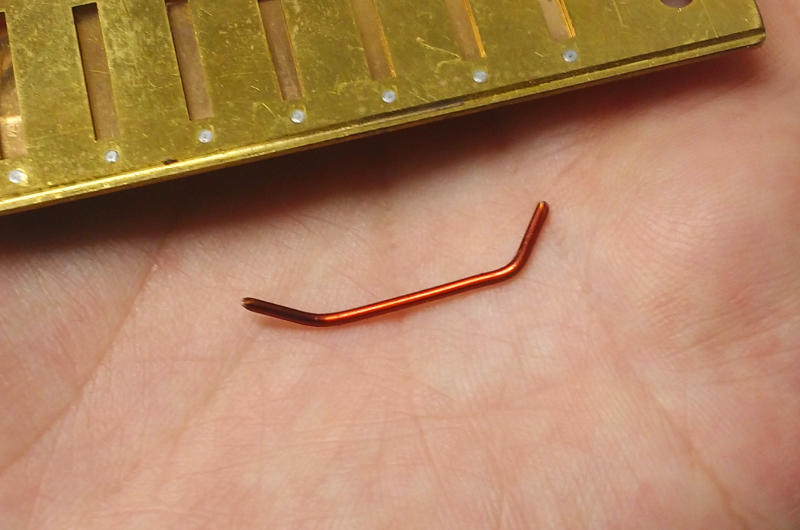
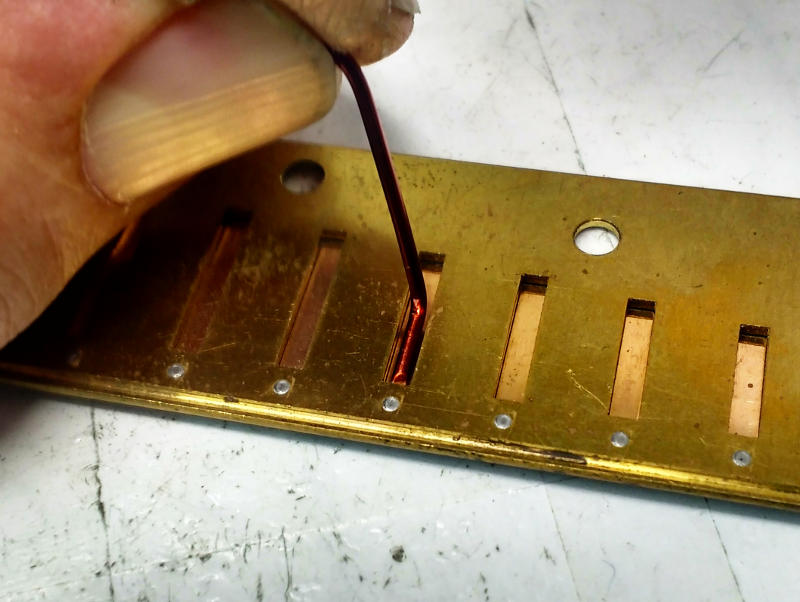
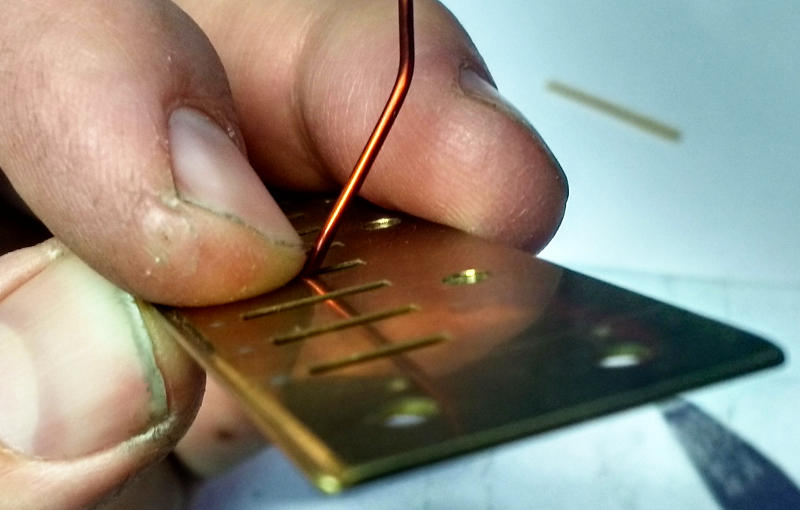
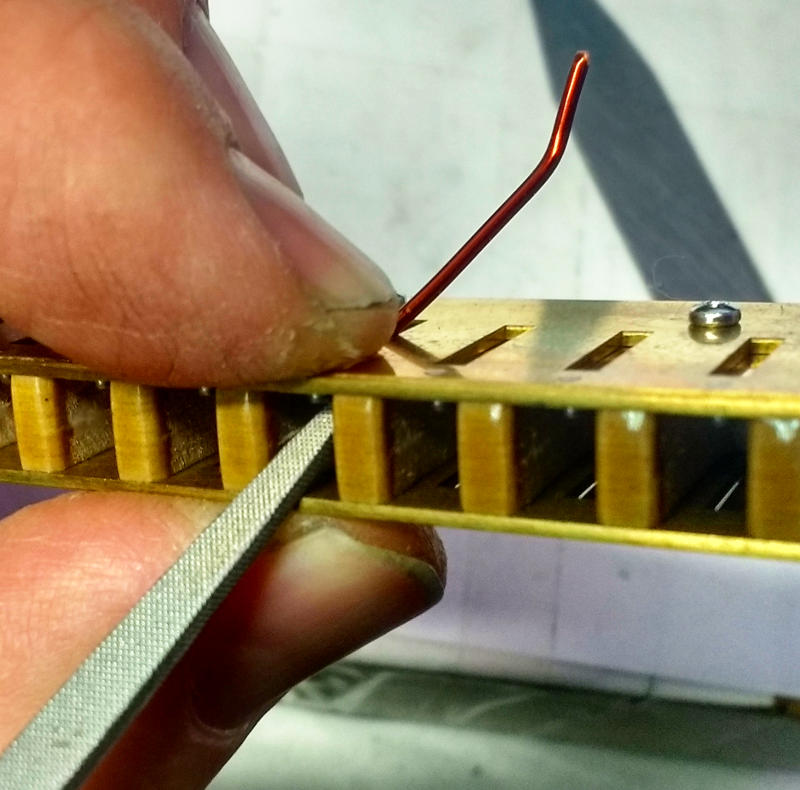
Here is an idea to support the base of the blow reeds while you lower the pitch with a quality file. You can support the reed using a piece of toothpick or 18 gauge copper wire. Use anything else you think might work.
We usually support a reed to lower the pitch using a plinker/support tool. We can't advance the support tool to the very base of the reed because there is no room and we would bend the reed out of shape if we force too much.
On the outside of the reed plate you can place something to support the reed and it can go all the way down to the base. Here's a small piece of toothpick:
Here's a piece of 18 gauge copper wire bent in the shape of a hockey stick (It actually has two bends in it to suit different reed lengths as well as to make it easier to pick up with my fingers):
It's just a matter of filing the base of the reed from the inside of the channel with a good quality file:
Send me a harmonica you have worked on for assessment. I can give you pointers and an action plan on how to get your results to the next level.
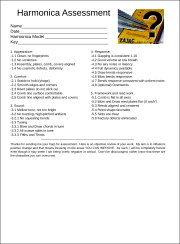
You can't find a problem unless you know where to look. I will give your instrument an objective 30-point assessment and tell you where to focus your efforts and improve your trouble areas.
You don't have to be a harmonica-service provider or repair tech to use this service. If you are a harp player who enjoys repairing and working on your own harps to save money but are stumped and can't seem to get the results you want, I can help you.
This service is aimed at those who have purchased my USB videos and have applied the ideas but it is also open to all others (an extra charge applies.)
___
- I will only accept professional-grade instruments. I will not accept any instrument Made In China.
- I will only accept clean instruments. Treat the instrument as though you are working on a harp for someone else.
- For the best possible assessment, I recommend you start from scratch on a brand-new instrument. This is only a suggestion; I realise this may not always be possible.
- I cannot guarantee quick turnover. I can commit to assessing your harp within 30 days of receiving it.
- Shipping costs to and from me are extra and paid by the customer. I will send you a Paypal invoice for the return shipping charge once I have completed the assessment and am ready to send the harp back to you.
1. The instrument should look nice.
2. The instrument should feel nice in the hand and in the mouth.
3. The instrument should sound nice with regards to tone and tuning.
4. The instrument should respond significantly better than stock.
___
I will contact you with instructions on how to get your harp to me.
___
What is a SMART goal?
S- Specific: What things make a harp great?
M- Measurable: These things can be measured.
A- Achievable: You can change these things.
R- Relevant: These things contribute to making this particular instrument great.
T- Trackable: You can assess how much closer you are to your goal after making a change.
This is taken from Facebook Live (with permission) during SPAH 2018. Joe Filisko is joined by Richard Sleigh and Joe Spiers to discuss the Hohner Affiliated Customizer Program. There was some audio interference which caused a very loud and unpleasant sound in a few spots. I did my best to fix the audio in this edit.
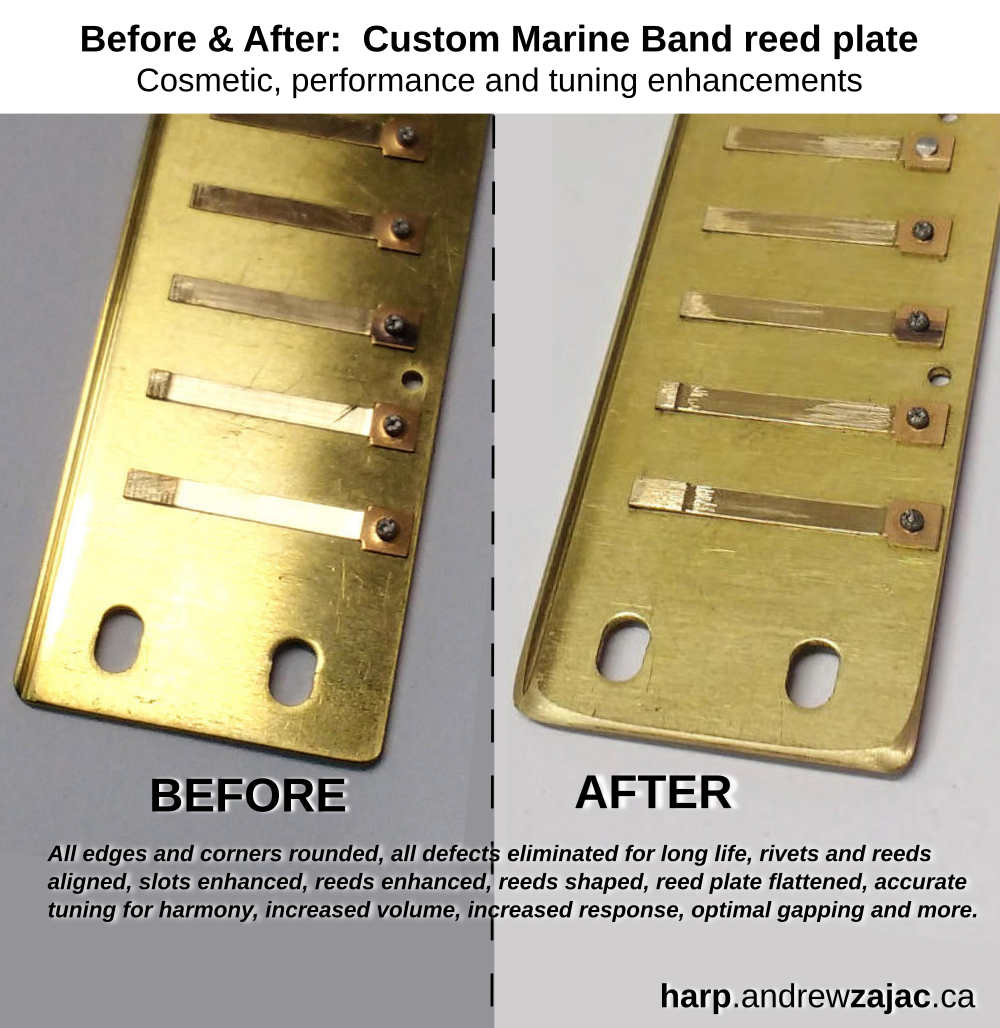
Here's a before-and-after look at a reed plate that has undergone customization.
I spend hours rebuilding and enhancing every aspect of a harmonica as I customize it.
I obtain all parts directly from the Hohner factory in Germany. I don't buy pre-assembled harmonicas because the first thing I would do is take them apart. In fact, I even take apart the parts! A custom harmonica is an instrument that has been rebuilt from the ground up.
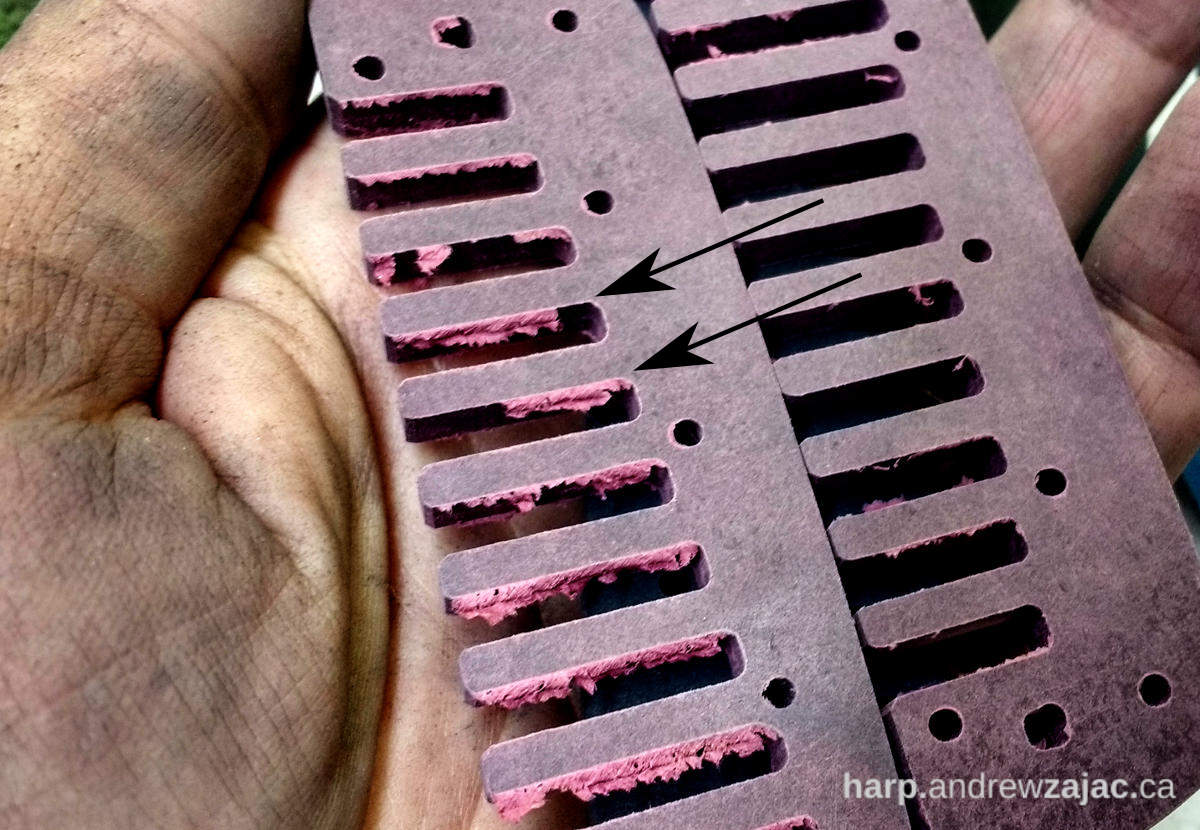
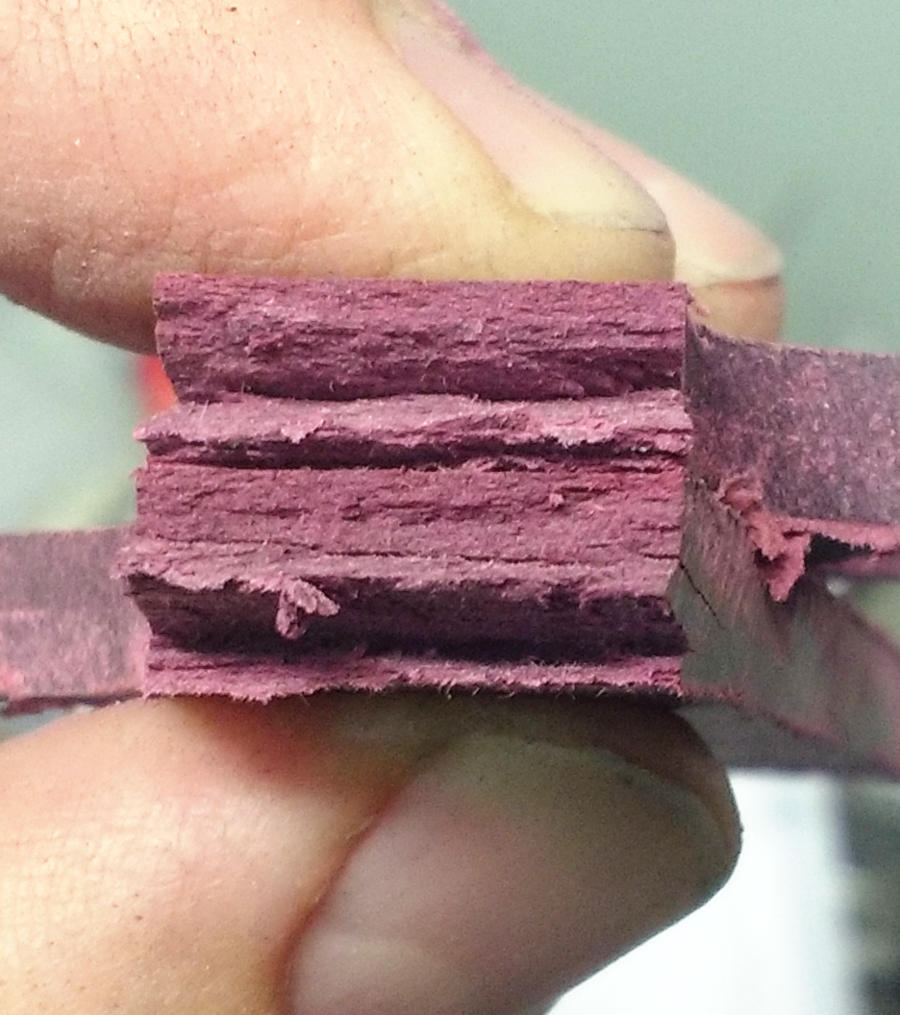
Here's a photo of freshly-cut Dark combs™ that have not been cleaned up yet. You can see the layers of paper fibres.
Many other types of solid-surface materials used to make combs can brighten up the tone of your instrument too much. I think one of the reasons my combs offer a darker, more natural tone is because of the network of paper fibres within the material.
These combs have all the benefits of a flat, unsealed Pearwood comb with none of the drawbacks.
Here is the side view of an off-cut piece that I snapped in half by hand - I had to use all my weight to break it in half!)
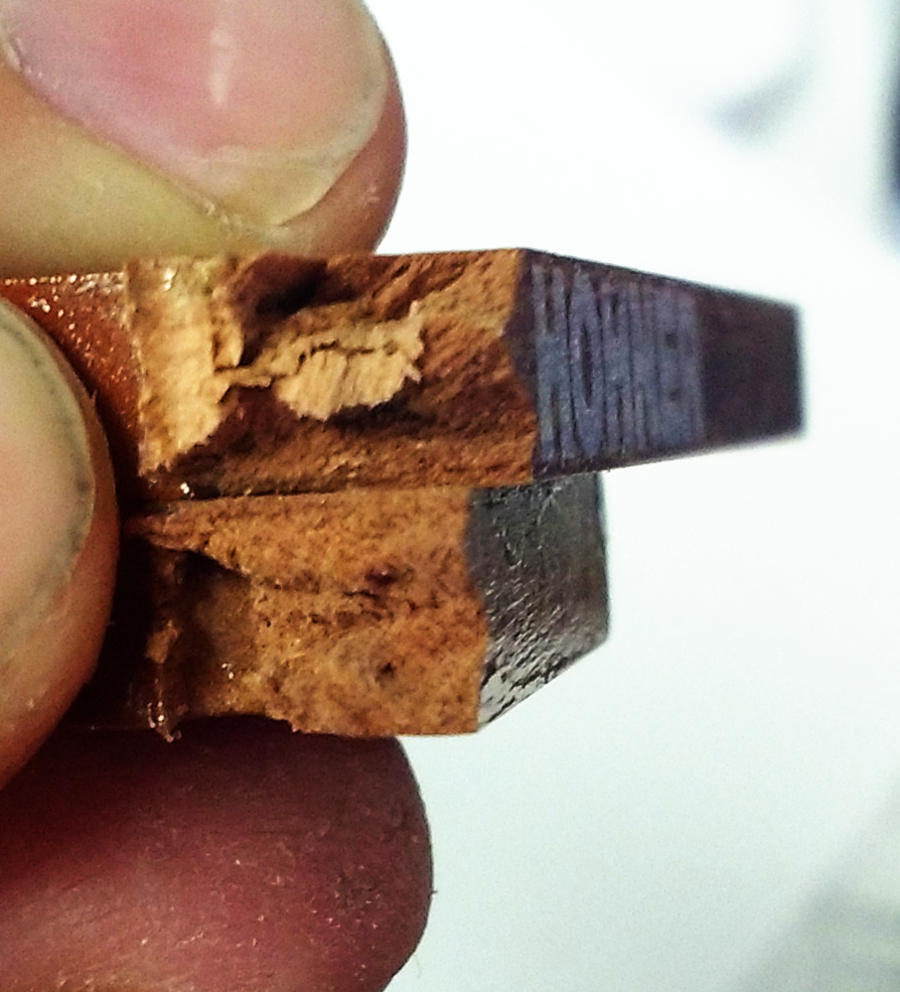
Here is the side view of a Hohner Marine Band Pearwood comb that I snapped in half by hand for comparison:
My Dark combs™ are made from an earth-friendly composite of 100 per cent recycled paper, resin produced from naturally occurring raw materials and selected natural pigments.
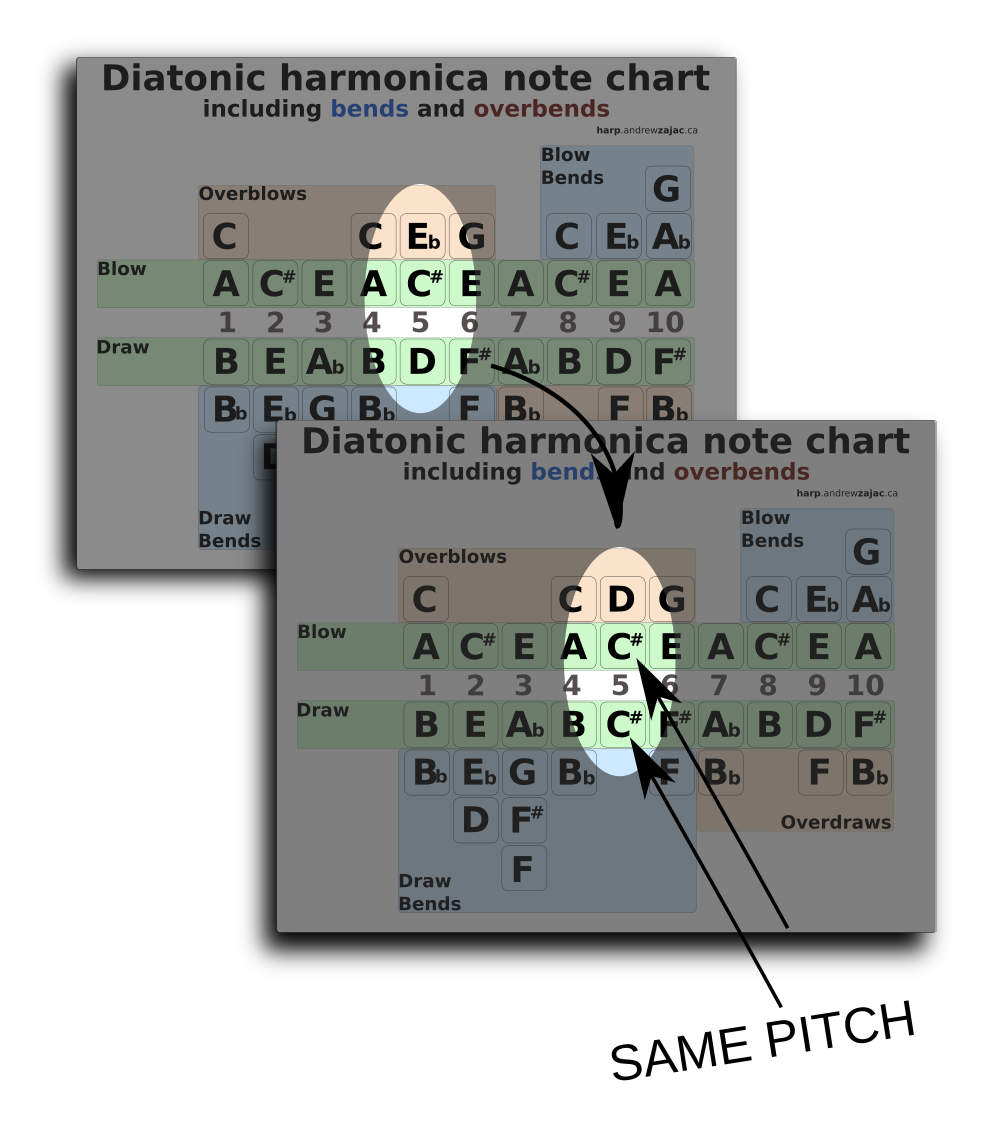
What happens when you overblow a hole with the SAME TONE on the blow and draw reeds? (Question by Zvika Dror Sparrow) This refers to an altered tuning where the notes of a Standard Richter harmonica are changed to open up new possibilities.
In this setting, if the reeds are not set up for overbends, you will get lots of squealing or as Winslow Yerxa puts it: "noises of unhappy protest."
If the reeds are properly set up, though, you can pop out an overbend.
This is slightly different than a conventional (two-reed) draw or blow bend where you need more than a semitone difference between the pitches of both reeds to "leave enough room" for a bend. For example, that's why there is no real draw bend on the 5 hole of a standard Richter diatonic.
Here's a harp that has some reed work which suppresses the ability of the reeds to squeal. This is hole five:
I applied some BluTak to the draw reed to temporarily drop the pitch to the same frequency as the blow reed. You hear both the blow and draw notes (same pitch but slightly different timbre) and the overblow.
I did the same thing (same harp) with the five six.
It didn't occur to me at the time to attempt and overdraw but I am assuming that if my overdraw technique on holes 5 and 6 were as good as my overblow technique, the note would have popped out just the same.
So, what happens when you overblow a hole with the SAME TONE on the blow and draw reeds?
Answer: The reed can overbend, albeit it's not as easy as when there is more room between the notes. It's a pretty crappy overbend. I would not ever sell a harp set up like this and claim it plays overblows well.
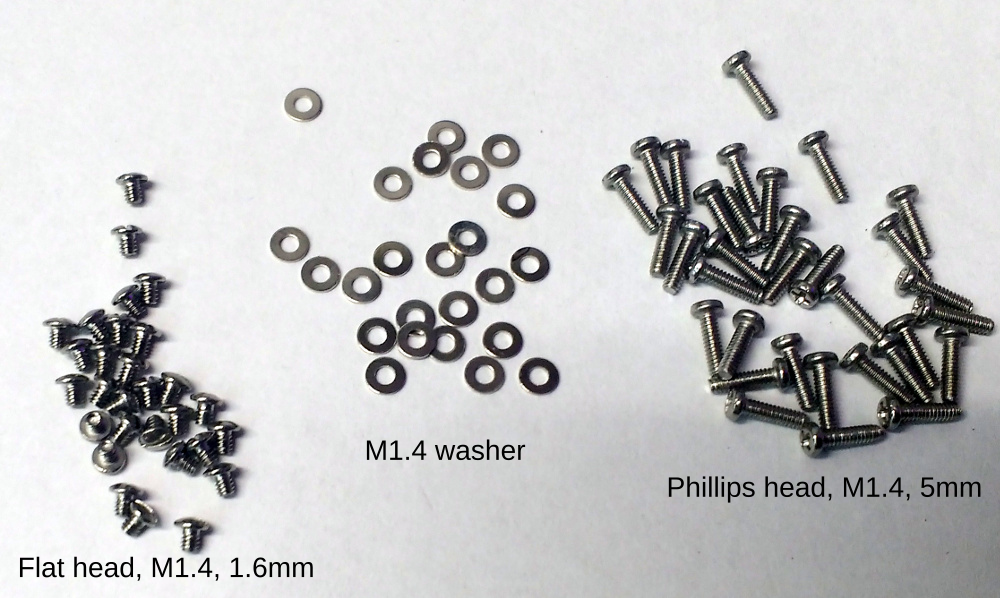
I'm now providing two types of screws for reed replacement in my reed replacement kit. I also include washers to make those reeds that just won't stand still behave.
All pieces are stainless steel and will never corrode. The Phillips head screw is 5mm long and easy to pick up with your fingers. You need to snip it off once it's in place. The flat head screw is much shorter and doesn't need to be trimmed - just set and forget. To make it easier to handle, you can dip the tip of your screwdriver in some Vaseline to make it stick!
An assortment of 75 pieces is included with the RRK. You can get more pieces here:
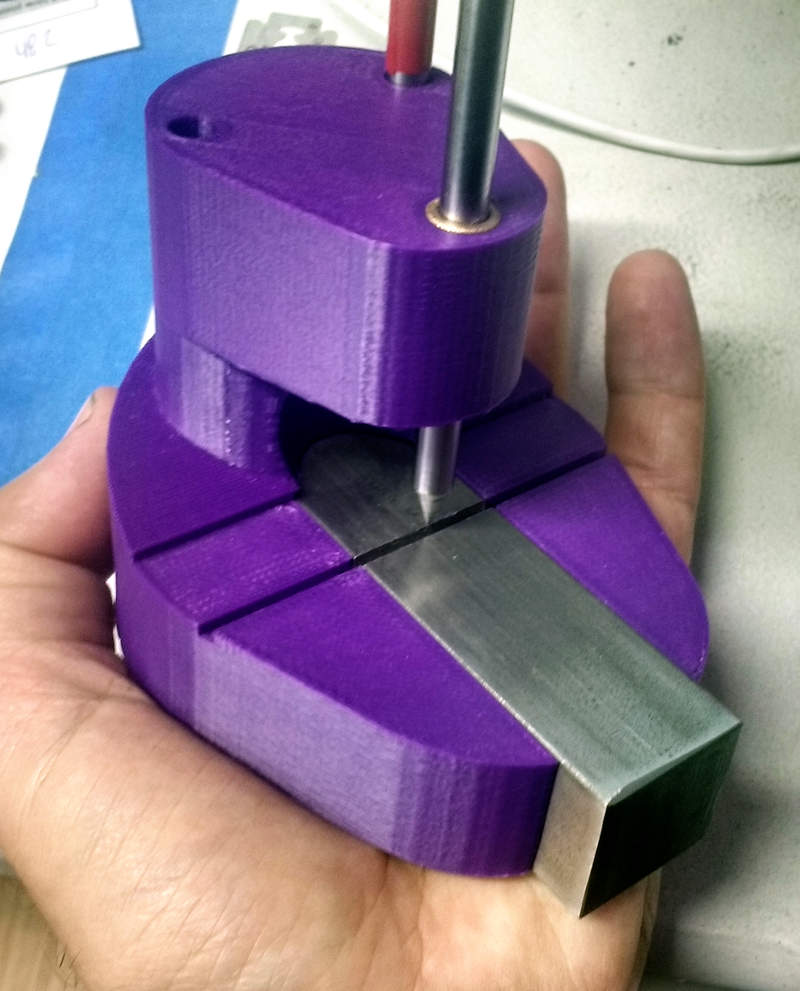
The functional part of the system uses a groove whereas other systems use a hole to accept the rivet head. The difference is irrelevant to the end result. The advantage of the RRS is that it makes the job easy, offering a stable platform where everything is lined up. You don't feel like you need an extra set of hands to accomplish the task.